
The first challenge rarely starts on the road. It starts at home, looking at a suitcase, a dog bed the size of an armchair, and a very large companion who is absolutely coming with you. A good guide to travelling with large dogs begins there – with space, planning and the reassuring idea that a holiday can still feel elegant, restful and uncomplicated when your dog is part of it.
Large dogs change the rhythm of travel in the best and most practical ways. They ask you to think ahead. They need room to stretch, places where they are genuinely welcome, and a routine that does not vanish the moment the car is packed. Get those details right, and the reward is considerable: calmer journeys, better days out, and the quiet pleasure of seeing your dog settle happily into a new landscape beside you.
A toy breed can often adapt to the gaps in a travel plan. A large dog usually cannot. Size affects everything from boot space and room layouts to walking routes, dining choices and how long you can comfortably spend in transit. That does not make travel difficult. It simply means comfort has to be designed rather than improvised.
This is where many pet-friendly promises fall short. “Dogs welcome” can mean very different things depending on the property. For a family travelling with a Labrador, a German Shepherd or a Golden Retriever, the real question is whether there is enough room to live well for several days, not merely whether the dog is allowed through the door.
The most enjoyable trips tend to be the ones built around freedom rather than compromise. Spacious accommodation, outdoor access, flexible meal options and a setting that suits long walks all matter more when you are travelling with a larger breed.
The most successful dog-friendly holidays begin with a short checklist that goes beyond documents and feeding bowls. Ask yourself how your dog travels, rests and decompresses. A large dog who loves the car may need little more than regular stops and a familiar blanket. A dog who is alert or anxious may need a shorter route, quieter timings and a gentler first day after arrival.
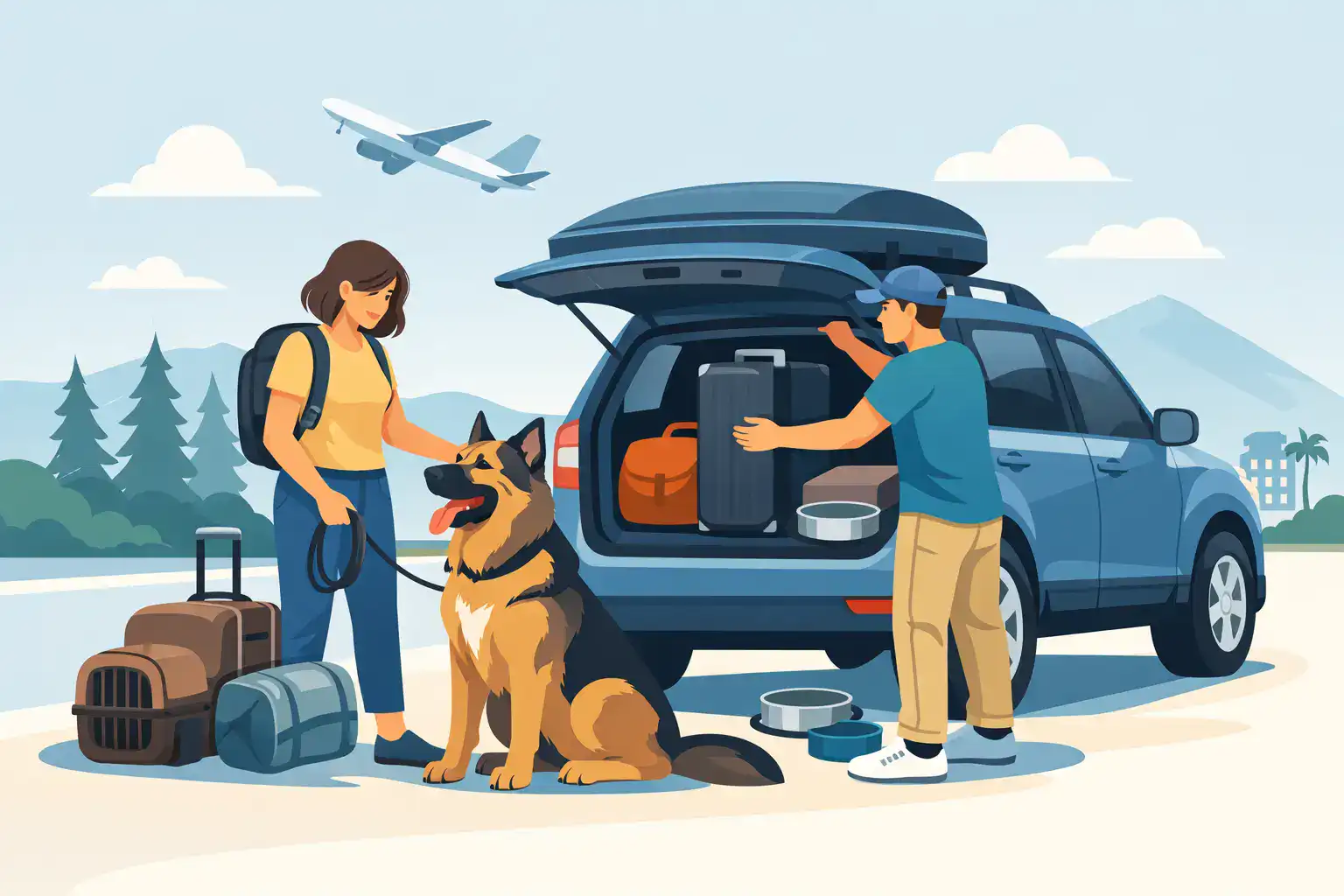
If you are travelling by car, measure the space properly. Guesswork is often fine for hand luggage, less so for a 35-kilo dog who needs to lie down comfortably. Crates can be excellent for some dogs, but they take up substantial room, and not every breed settles best in one. A harness and seat-belt attachment may offer more flexibility, though it depends on your dog’s temperament and how long the journey will be.
Pack with your dog’s normal routine in mind. Bring their usual food, treats, lead, harness, bed, towel and water bowl, plus anything that smells familiar. One of the simplest ways to help a large dog settle into new surroundings is to make one corner of the room feel immediately like home.
Most large-dog holidays in Europe begin by road, and that often makes life easier. You control the temperature, the timetable and the number of breaks. More importantly, you can respond to your dog rather than forcing them to adapt to a rigid transport schedule.
Set off earlier than you need to. Rushed departures tend to create tension before the journey has properly begun. Give your dog a good walk first, but avoid overexertion in warm weather. Once on the road, plan regular stops where your dog can drink, stretch and settle before getting back into the car. Some dogs need movement at every break. Others prefer a short sniff, a drink and a return to their spot.
Temperature deserves special attention. Large dogs, especially thick-coated breeds, can overheat quickly. Even mild sunshine through car windows can create discomfort. Shade, airflow and frequent water breaks are not luxuries. They are part of travelling well.
Feeding also benefits from restraint. A very full stomach and a winding coastal road are not always an ideal pairing. Lighter meals before travel, followed by a proper meal after arrival, often work better.
The phrase pet-friendly is useful, but it is not precise. When you are travelling with a larger dog, look for evidence of genuine ease. Is there outdoor space? Are there walking areas nearby? Can your dog move around the room comfortably without turning the whole stay into an obstacle course? Is the atmosphere relaxed enough that you do not feel you must apologise for your dog taking up space?
This is especially important for longer stays, where comfort becomes part of the holiday rather than a detail at check-in. Suites, family rooms or residence-style accommodation often make a noticeable difference because they allow dogs and people to settle into separate moments of the day. Someone can rest, someone can shower, the dog can sleep, and the room still feels peaceful.
If your holiday includes children, that sense of space matters even more. Large dogs are often wonderfully calm with family life, but they still need a quiet area to retreat to. The best accommodation supports this naturally.
For travellers heading to the Ligurian coast, choosing a resort that already understands pet-friendly stays can transform the experience. At Villa Giada, for example, spacious surroundings and a flexible holiday style make it easier to include a large dog without losing the sense of ease that a proper resort stay should offer.
Dogs do not need every hour of the day to look the same as it does at home. They do, however, benefit from patterns they recognise. Meal times, walks and rest periods are the anchors that help them understand a new environment.
Try to keep mornings familiar. A walk before breakfast, a pause in a shady outdoor space, and a settled start to the day often set the tone. If you plan excursions, consider your dog’s energy honestly. A large dog can be athletic, but heat, crowds and long periods of waiting around can quickly turn an appealing day out into a tiring one.
There is a trade-off here. Some travellers want to fit everything in. With a dog, especially a large one, the better holiday often comes from doing slightly less and enjoying it more. A long coastal walk, a relaxed lunch, time back at your accommodation, and an evening stroll can feel richer than an overfilled schedule.
One of the pleasures of a dog-friendly break is sharing more of the day together, but it helps to understand where your dog will genuinely be comfortable. Not every restaurant terrace suits a large dog lying under the table, and not every beach allows dogs at all times of year. Checking ahead avoids awkward moments and allows you to choose places where your dog is not merely tolerated but welcome.
Large dogs also tend to attract attention, which can be charming or tiring depending on the day. If your dog is sociable, that may be part of the fun. If they are reserved, choose quieter times and less crowded settings. Early mornings and later afternoons often offer the most pleasant rhythm, particularly in warmer months.
Carry water everywhere, and a towel if your plans include the sea, dusty paths or muddy paws after a walk. A little practical preparation protects not only your dog’s comfort but also the ease of returning to your room without fuss.
Even experienced travelling dogs can need time to adjust. A new room may bring unfamiliar sounds. A balcony, lift or busy corridor can feel strange at first. If your dog seems restless, reduce stimulation rather than trying to distract them constantly.
Start small. Let them explore one area, offer water, set down their bed, and keep your own energy calm. Many dogs settle once they understand where they sleep and when the next walk is coming. If not, shorten your plans for the first day. There is no prize for forcing a perfect schedule.
It also helps to notice your dog’s individual thresholds. Some large breeds cope beautifully with novelty but dislike being left alone in unfamiliar surroundings. Others are independent and settle quickly once they have had exercise. Knowing which dog you have is more useful than following any universal rule.
The real secret in any guide to travelling with large dogs is not a gadget or a packing trick. It is choosing a style of holiday with enough physical and mental space for everyone. Large dogs thrive when travel feels spacious, unhurried and welcoming. So do their people.
That may mean driving instead of flying, booking the larger room, accepting a slower pace, or choosing a destination where walks, sea air and open surroundings do half the work for you. None of that lowers the standard of your holiday. If anything, it raises it.
The best trips with a large dog feel less like managing a complication and more like sharing a life you genuinely enjoy. When the setting is generous, the routine is thoughtful and the welcome is real, travelling together becomes exactly what it should be: relaxed, beautiful and wonderfully easy.
Ideas, experiences and inspiration for your next stay.