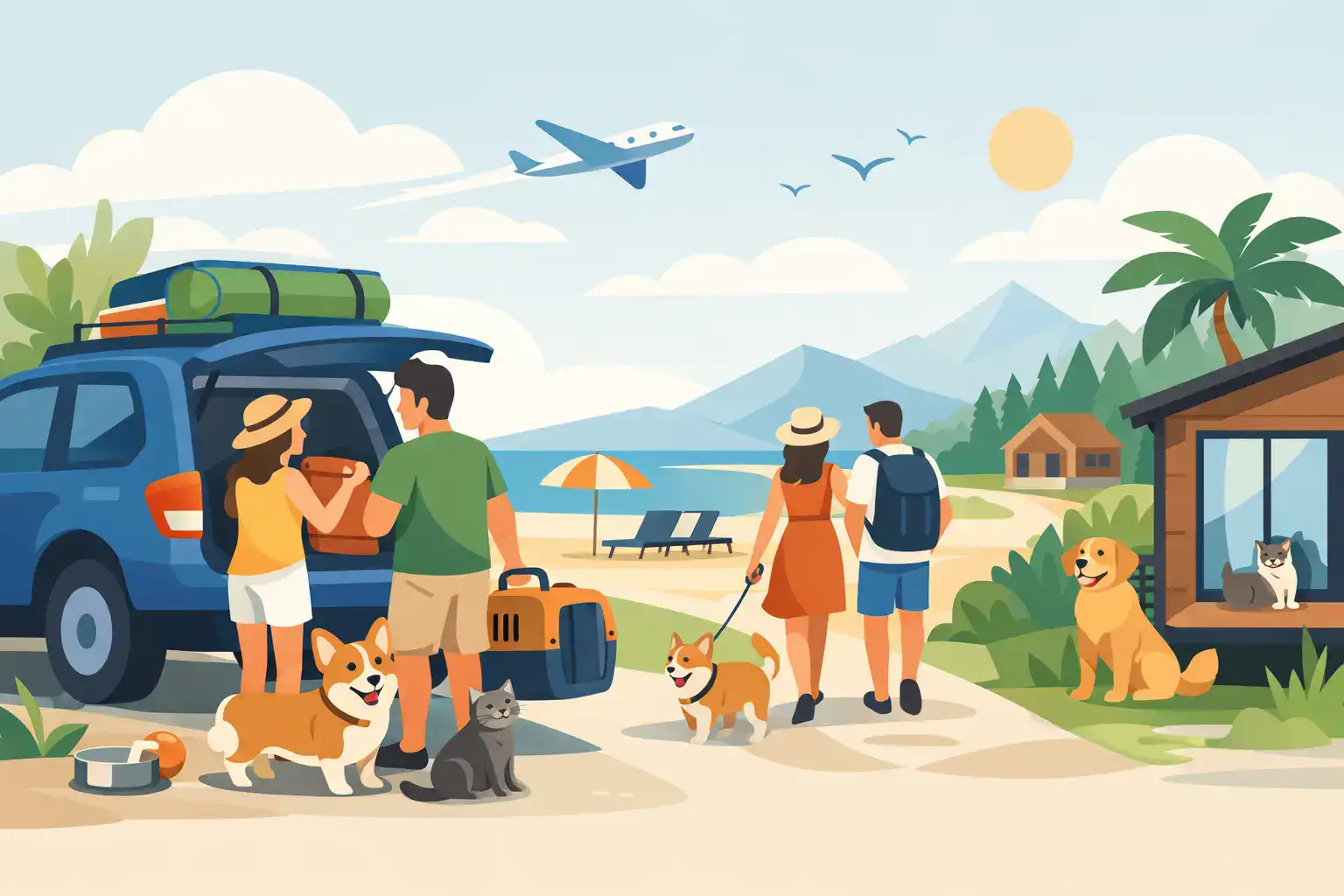

The moment a dog bowl appears as an afterthought by reception, most pet owners know exactly what kind of stay they are in for. A true guide to pet inclusive holidays starts somewhere else entirely – with space to settle, freedom to move, and the feeling that your pet is welcomed as part of the holiday, not merely tolerated.
For many travellers, bringing a dog should make a break feel easier, warmer and more complete. Yet the reality can be mixed. Some places advertise themselves as pet-friendly, then limit where pets can go, charge heavily for basic allowances, or offer rooms that feel less comfortable than the rest of the property. A genuinely pet-inclusive holiday asks a better question: what does everyone need in order to relax well?
The difference between pet-friendly and pet-inclusive is subtle on paper, but obvious once you arrive. Pet-friendly often means permission. Pet-inclusive means planning. It shows up in room layouts that give you enough floor space for beds, bowls and luggage without feeling crowded. It appears in outdoor areas where morning walks are pleasant rather than a logistical exercise. It matters at mealtimes too, when flexible dining options let owners enjoy good food without leaving their dog unsettled for hours.
This is why the best guide to pet inclusive holidays is not only about rules. It is about rhythm. How smoothly can you move through the day? Can your pet rest well after travelling? Is there shade, fresh air and room to decompress? Can you choose between active hours and slower ones without constant compromise?
For couples, families and longer-stay guests, these details have a direct impact on the quality of the holiday. Comfort is not a single feature. It is the ease with which everything fits together.
When choosing accommodation, it is tempting to focus first on whether dogs are allowed. That should only be the beginning. The more useful question is whether the accommodation suits the way you actually travel.
If you are away for several nights, room size matters more than many people expect. A compact room may work for a city stopover, but on a coastal break you are likely to return with beach bags, walking shoes, leads, towels and perhaps children too. Space brings calm. It allows your pet to settle into a corner of the room, rather than being underfoot from the moment you unpack.
Outdoor access is just as important. Properties with gardens, terraces or open grounds tend to make pet travel feel more natural, especially for early morning walks and the last outing of the evening. This is one reason resorts with a sense of openness can work particularly well. At Villa Giada, for example, the feeling of SpEace – generous space shaped around peace – suits guests who want their holiday to breathe a little, including those travelling with dogs.
There is a trade-off, of course. A highly central location may put shops and promenades at your doorstep, while a more spacious resort setting often gives you a quieter, more restorative base. Which matters more depends on whether your priority is constant movement or a softer daily pace.
A successful pet-inclusive break begins before check-in. Many owners plan the drive around distance alone, when they should really plan around arrival energy. If your dog arrives overstimulated, thirsty and tired, even the loveliest room can feel like a challenge for the first few hours.
Build in pauses rather than one long push to the destination. Water, shade and a chance to stretch make a clear difference, particularly in warmer months. Keep one bag easily accessible with the practical essentials: lead, waste bags, towel, bowl, food and anything your pet associates with home. Familiar objects do more than comfort. They tell your dog, quickly and quietly, that this new place is safe enough to rest in.
Think carefully about timing too. Arriving late can work for adults, but it can be less comfortable with a pet, especially if check-in is followed by a search for an evening walk area. A daytime arrival often makes the first impression smoother. Your dog can explore calmly, settle before dinner and adjust to the new surroundings while there is still light.
Not every holiday style suits pets equally. Fast-paced itineraries filled with museums, long shopping afternoons and indoor attractions can leave dogs spending too much time alone. Coastal and nature-led destinations are often easier because the holiday itself happens outdoors.
This is where the Riviera offers a particular kind of appeal. Sea air, scenic roads, walking routes and a gentler tempo create a more natural setting for shared days. You can shape the experience around what suits your household, whether that means a morning by the coast, an active afternoon on local paths, or slow time on a terrace with no timetable to chase.
Families often benefit most from this flexibility. Children, pets and adults rarely want exactly the same thing at exactly the same hour. The right destination gives you options without friction. A good holiday does not force everyone into one pattern. It leaves room for appetite, energy and mood.
Food is one of the pleasures that defines a good resort stay, but pet owners know it can also be the point at which a day becomes awkward. If dining is rigid, the whole schedule tightens around it. If dining is flexible, the holiday opens up.
This is why meal formulas are worth considering when you book. Breakfast is usually simple enough, but evenings can be more variable depending on your dog’s temperament and how much rest they need after a day outside. Some travellers prefer the freedom of self-catering for a few meals. Others enjoy combining independent days with selected dinners, so they can choose when to linger over a restaurant table and when to keep things quiet.
There is no single right answer. The point is to choose a stay that gives you room to decide day by day. Luxury, after all, is often flexibility dressed in beautiful surroundings.
Dogs tend to thrive on predictability, yet holidays are at their best when they feel lighter than everyday life. The balance lies in keeping a few anchors while relaxing everything that does not need to be strict.
Meal times should stay fairly consistent. Walks should still happen often enough to keep your dog comfortable and settled. Sleep matters too, particularly after travel or hot weather. Beyond that, it helps to loosen expectations. Your dog may nap more than usual after long days outdoors. They may become more alert in new surroundings. Both are normal.
Owners sometimes overfill the itinerary because they want to make the most of every hour away. In practice, pets often improve the quality of a break by slowing it into a better shape. You notice more. You spend longer outdoors. You pause in quieter places. What first looks like limitation can become a gentler, richer way to travel.
The most polished stays are often held together by small decisions. Pack a spare towel for sandy paws. Bring a sheet or blanket your dog already uses. Check whether nearby walking routes have shaded stretches for warmer afternoons. If your pet is nervous, ask for accommodation in a quieter position where passing noise is reduced.
It also helps to be realistic about your own dog. A sociable pet may love a lively setting with plenty going on. A more sensitive one may be happier in a calmer environment with private outdoor space and fewer surprises. Pet-inclusive travel is not about pretending every dog enjoys the same holiday. It is about matching the setting to the animal you actually have.
That same honesty makes for a better experience for everyone around you. If your dog struggles when left alone, plan stays where you can spend more time together. If they are energetic, build in proper exercise before expecting them to settle through dinner or rest periods. Thoughtfulness is what makes shared hospitality feel effortless.
When a resort gets this right, the effect reaches beyond the dog. Owners relax more quickly. Families argue less over logistics. Couples can keep the warmth of travelling together without the underlying worry that someone is uncomfortable. The holiday begins to feel whole.
That is the real promise behind pet inclusion. Not simply access, but ease. Not merely a stay that permits your pet, but one that supports the way you want to live while you are away – with good food, beautiful surroundings, restorative space and the freedom to move at your own pace.
If you are planning your next coastal break, choose the place that makes that feeling possible from the outset. The best pet-inclusive holidays do not ask you to split comfort between two-legged and four-legged guests. They give everyone more room to belong.
Ideas, experiences and inspiration for your next stay.