You arrive on the Ligurian coast with the sea in view, the bags finally unpacked, and one question still hovering in the background: is half board worth it when what you really want is a holiday that feels easy? For many travellers, the answer comes down to a simple balance between freedom and comfort. If breakfast and dinner remove daily decisions without making your days feel scheduled, half board can be one of the smartest choices you make.
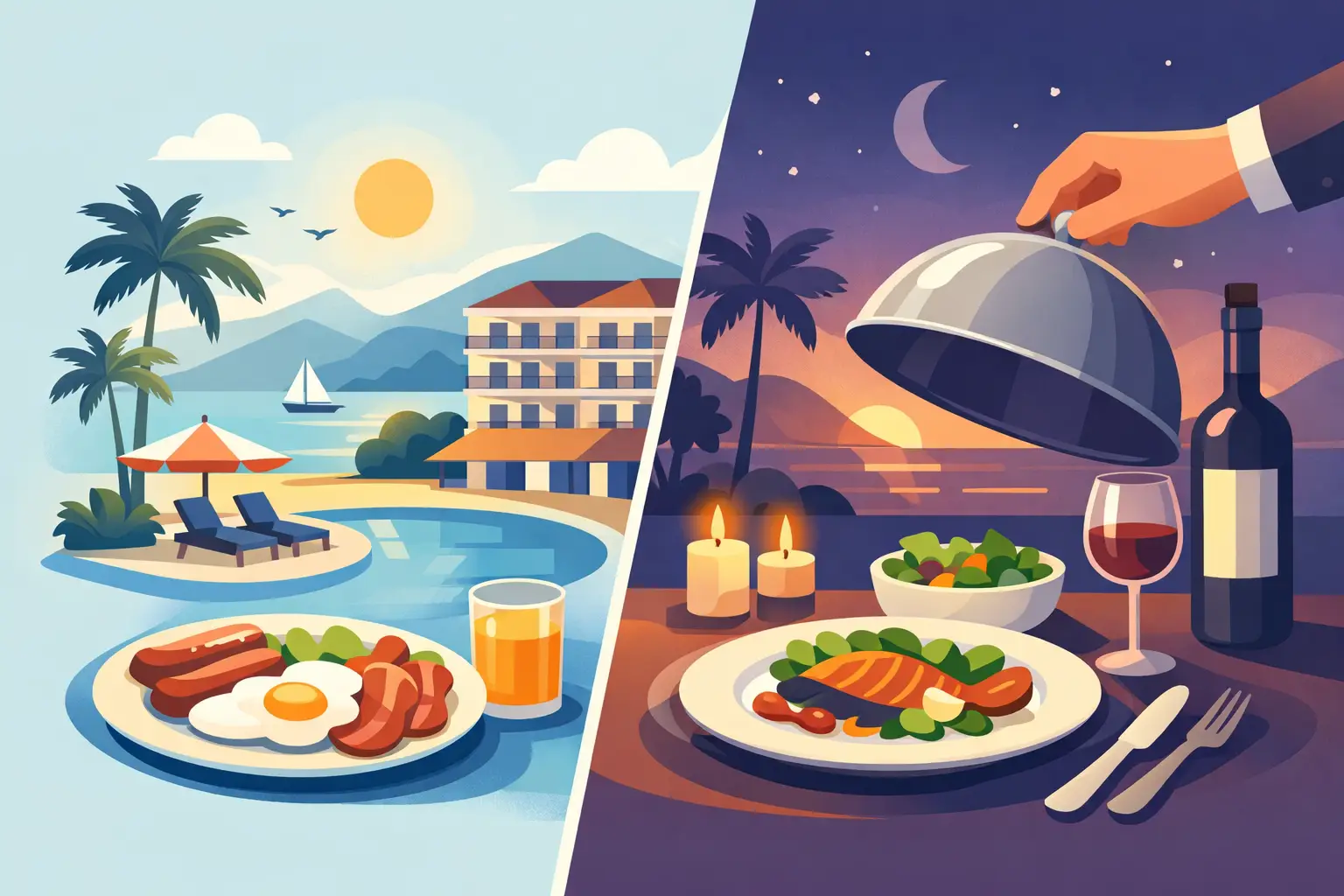
Half board usually includes breakfast and dinner, while leaving lunch and daytime plans open. That middle space matters more than people expect. It means you can spend the morning by the pool, head out for a coastal walk, take children to the beach, or linger over an aperitif in town without feeling tied to a fixed full-board routine.
That is why half board appeals to so many different kinds of guests. Families appreciate the structure. Couples enjoy the ease. Active travellers like having a proper meal ready after a day outdoors. It creates a gentle rhythm for the holiday – one where the essentials are taken care of, but the day still belongs to you.
In the right setting, it also changes the mood of a stay. Rather than wondering where to eat every evening, or whether nearby restaurants will suit everyone in your group, you begin the day knowing that certain pleasures are already in place. Good coffee in the morning. A relaxed dinner later on. Less logistics, more holiday.
Not always. The value of half board depends on how you like to travel.
If you are the sort of guest who wants to explore a different restaurant every evening, it may feel too restrictive. Food is often part of the destination experience, and for some people, choosing a new table each night is part of the fun. If your ideal holiday is highly spontaneous, or if you tend to dine out late and casually, room only or breakfast only may suit you better.
But many travellers overestimate how much they will want to search for dinner every night. After a full day in the sun, or after managing children, sport, sightseeing, or simply the delicious effort of doing very little, convenience starts to feel rather luxurious. By day three, not having to plan the evening meal can feel less like compromise and more like relief.
So, is half board worth it? Very often, yes – particularly if you want your stay to feel smooth, cared for, and generous rather than improvised at every turn.
People often judge half board purely on price, but that misses the point. The value is not only what you save compared with paying separately for breakfast and dinner. It is also what you avoid spending in time, energy, and small daily negotiations.
A family with children may save themselves the familiar late-afternoon discussion about where to eat, whether there is a table available, and whether the menu will suit everyone. A couple may avoid the subtle stress of having to make a plan each evening when what they actually want is to stay in a beautiful setting and let the day unfold more softly. A cyclist or hiker may simply want the reassurance of a proper dinner waiting after hours outdoors.
There is also a quality element. When meals are part of a well-designed resort experience, they tend to feel integrated into the wider stay rather than added on as an afterthought. The atmosphere, timing, service, and setting all support that sense of ease. You are not just buying food. You are buying continuity.
Half board tends to shine in destinations where days are active but evenings are best enjoyed without complication. Coastal stays are a good example. You might spend the day moving between the sea, a spa, village streets, scenic roads, or family activities, then return ready to settle in rather than start another search.
It is also a strong option for longer weekends and week-long breaks, where a little structure improves the whole pace of the stay. Breakfast anchors the morning. Dinner gives the evening shape. Lunch remains free for a beach club, a light bite after a walk, or a spontaneous stop during an excursion.
For families, half board can be particularly sensible because children rarely get less hungry simply because adults are enjoying a slow sunset. Knowing dinner is already arranged removes one of the most common friction points of travelling with little ones. For couples, the appeal is different but no less real. Half board can create a more cocooned atmosphere – a holiday where you move from room to pool to wellness to dinner without constantly stepping back into decision-making mode.
At a place such as Villa Giada SpEace Resort, this kind of formula naturally suits the wider holiday style: spacious, relaxed, and flexible, with enough structure to support comfort and enough freedom to make the stay feel personal.
Half board can feel less worthwhile if your plans revolve around evening exploration. If you expect to be out late every night, driving along the coast, meeting friends in nearby towns, or booking dinner elsewhere as part of the experience, you may not make full use of it.
It can also be a weaker fit for travellers who prefer very light evening meals. If dinner is usually just a simple snack for you, the convenience may not justify the extra cost. Equally, if your schedule is unpredictable and you dislike any sense of commitment, even a good dining plan can feel like a tie.
This is where honesty helps. The best meal formula is not the one that sounds most inclusive. It is the one that reflects how you genuinely spend your time on holiday.
A more useful question is this: what kind of holiday do you want to have?
If you want complete independence, choose a plan that leaves every meal open. If you want a blend of autonomy and comfort, half board often hits the sweet spot. It gives enough freedom for leisurely lunches out, day trips, and a change of scene, while protecting the two moments of the day that matter most – how you begin and how you end.
That is why half board works so well for travellers who want their holiday to feel elevated rather than over-managed. It is not about packing the schedule. It is about removing avoidable friction.
Think about your holiday in real terms, not idealised ones. Picture an average day rather than the most ambitious version of your plans. Will you really want to research restaurants every night? Will everyone in your group still be cheerful by 7 pm? Will returning to a calm setting for dinner feel limiting, or exactly right?
Also consider the destination itself. In a resort environment where the atmosphere, cuisine, and setting are part of the pleasure, dining in can be a genuine extension of the stay. In that case, half board offers more than convenience. It deepens the feeling of being looked after.
Finally, think about your pace. Many guests want movement in the day and ease in the evening. They want to swim, explore, walk, cycle, rest, and choose as they go – but not necessarily make every single decision from scratch. That is the traveller half board suits best.
Half board is worth it when it gives you more of what holidays should feel like: time, calm, flavour, and room to enjoy where you are. If that sounds closer to what you are seeking than another evening spent comparing menus on your phone, you already have your answer.